AMD's RDNA 4 GPUs, including the , have been out since February. But only now has AMD revealed that they are based on a clever modular architecture.
at the conference yesterday. And perhaps the most intriguing new disclosure is RDNA's so-called "modular SoC architecture".

This contrasts with typical GPU designs, where the layout and positioning of h25 com สล็อต the various elements will vary from GPU to GPU. Each GPU design is basically bespoke. Should you peer inside, say, an , you won't see a carbon copy of the internals of an with some bits added on. Each GPU has its own layout.
Anyway, for AMD this means it only has to design that base SoC layout once and in turn that creating the larger GPU variant is limited to adding the additional components, everything else is carried over using exactly the same layout. That speeds up design, validation, reduces the number of steps before the GPU is sent to the fab for manufacture and so on.
In terms of how this applies to AMD's current RDNA 4 GPUs, the Navi 44 GPU in the is essentially the base SoC with two shader engines and four memory controllers, while the Navi 48 GPU in the Radeon 9070 XT is the larger variant with the added shader engines, memory controllers, cache and so on.
The two GPUs still use different silicon. The smaller GPU isn't just the larger GPU with a bit physically sliced off. It's worth noting that would entail throwing away the additional shader engines, cache and memory controllers because they don't have the necessary elements, such as a display engine, required to actually be a functional GPU. But in terms of design and engineering, the modular u31 game เข้าสู่ระบบ approach makes the process faster and cheaper.
Given all that, it is slightly ironic that AMD has only produced a relatively narrow range of GPUs for this current RDNA 4 generation. But it's not clear the modular approach of RDNA 4 was ever intended to extend beyond the quad shader engine design of the Navi 48 GPU.
Put it this way, if you look at the size and shape of Navi 48, it's already a distinctly rectangular chip. Adding another two or even four shader engines and associated hardware would result in the very long and thin chip. Whether it's internal or external interconnects, not to mention chip packing, there are probably limits to how far this modular approach can be taken.
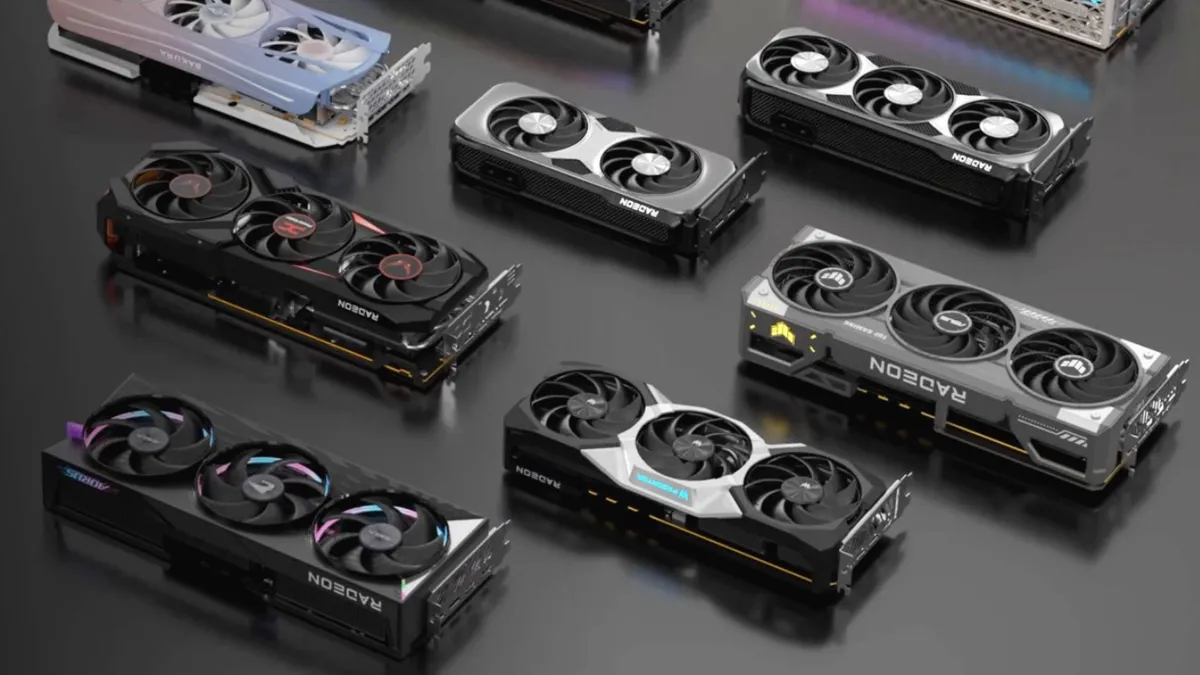
As for what this implies about AMD's future GPU designs, it's hard to say. This is all subtly different from the chiplet engineering that AMD has used to such success in its CPUs. AMD did actually have a crack at chiplets for RDNA 3 and graphics cards like the R, of course, only to return to monolithic GPUs for RDNA 4.
There are rumours that AMD is planning on a return once again to chiplets for its next-gen graphics, variously referred to as RDNA 5 and . According to some rumours, AMD has cooked up a new mid-range GPU roughly equivalent to the Navi 48 chip in the RX 9070 XT, codenamed AT2, with 64 compute units.
But the interesting bit is that as many as three AT2 GPUs can allegedly be combined to make AT0, a new high-end monster with up to 192 compute units, though it's claimed the gaming version of this beast will be limited to 154 CUs.
For context, and always bearing in mind that compute units can't be directly compared across generations, Navi 48 has 64 compute units. Of course—and this is where the "modular" disclosure this week may come in—it's possible that RDNA 5 isn't chiplet-based, per se, but that AMD's AT2 GPU is a new base SoC that can be scaled up in design terms to create larger monolithic CPUs, just as Navi 44 is scaled up to Navi 48.
Anyway, this is all speculation for now. But here's hoping AMD revealed the whole "modular SoC architecture" thing yesterday in order to hint at plans for a broader range of GPUs from its next-gen architecture, including a top-end beast to keep whatever Nvidia has planned to replace the honest.
👉👈
1. Best overall:
2. Best value:
3. Best budget:
4. Best mid-range:
5. Best high-end: